Begin with the waterfront life you actually want
Start by deciding what you hope to do with the water. A sunset view, a place to launch kayaks, quick harbor access, room for a particular boat, and a quiet nature setting are not the same search. The clearer your priorities are, the easier it becomes to compare properties fairly.
Ask whether boating is essential or simply a possibility. If you own a boat, record its length, beam, draft, height, and weight before touring homes. If you do not own one yet, describe the type of boating you expect to enjoy. Those details can determine whether a canal, bridge, dock, or lift works for you.
- Harbor, river, bay, canal, lake, or direct Gulf frontage
- Boating, fishing, paddling, wildlife, privacy, or the view
- Protected water or a more exposed shoreline
- Existing boat dimensions and the route you expect to use
- How often you want to reach open water
Trace the complete route from the dock to open water
A dock does not automatically mean unrestricted Gulf access. Follow the route on a map and verify every practical limitation: fixed bridges and their clearances, canal depth, tides, locks if applicable, no-wake areas, travel time, and the dimensions of the waterway.
Online descriptions are a useful starting point, but they are not enough for a boat-specific decision. Water levels and conditions change. When access is central to the purchase, confirm the route with current official information and qualified local marine professionals—and experience it by boat when possible.
- Are there fixed bridges between the property and open water?
- Does the route suit the boat’s height and draft?
- How do tides and seasonal water levels affect access?
- How long does the trip take at legal speeds?
- Who maintains the canal or waterway?
Inspect the seawall as seriously as the house
A seawall is a major property component, not background scenery. Look for movement, cracking, bowing, erosion, soil loss, settlement, drainage issues, and separation around the cap or neighboring walls. The yard, pool deck, dock, and landscaping can also provide clues that deserve professional attention.
A general home inspection may not provide the specialized evaluation a seawall requires. For a property you are seriously considering, ask about age, prior repairs, permits, warranties, and shared responsibilities, then consult a qualified marine contractor or engineer when appropriate. Obtain realistic repair or replacement guidance before the contract deadlines pass.
- Seawall, cap, tiebacks, drainage, and visible settlement
- Connections to neighboring seawalls
- Past permits, repairs, invoices, and warranties
- Responsibility under any association or shared agreement
- A specialist’s opinion and written cost guidance when needed
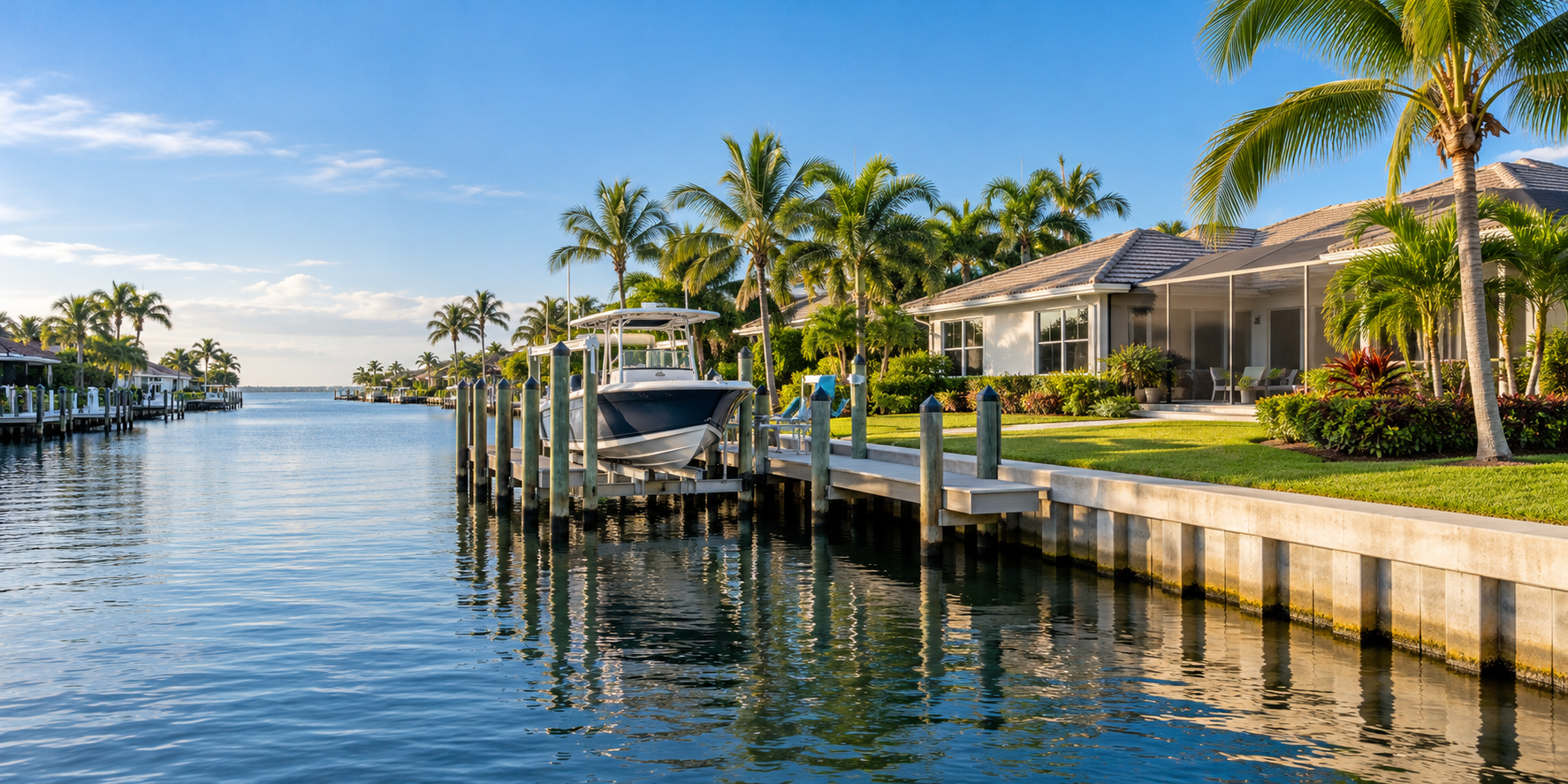
Verify the dock and boat lift—not only that they exist
A dock or lift should be evaluated for condition, permits, dimensions, capacity, utilities, and suitability for your boat. Review pilings, decking, hardware, electrical service, water connections, roof or canopy components, and the lift equipment. A lift that is present may still be too small, poorly maintained, or not approved for the way you intend to use it.
Charlotte County requires permits for residential dock and boat-lift work in many situations, and Florida environmental or submerged-land authorization may also apply. Confirm the records for the exact property and do not assume that an existing structure can automatically be enlarged, replaced, or reconfigured.
- Dock and lift permit history
- Lift make, capacity, service records, and operating condition
- Dock dimensions, pilings, decking, electric, and water
- Property lines, riparian setbacks, and association restrictions
- Current county and state requirements for future work
Separate flood zone, evacuation zone, elevation, and insurance
These questions are related, but they are not interchangeable. FEMA’s Flood Map Service Center is the official source for current flood-hazard information, while Florida’s Know Your Zone tool addresses hurricane evacuation zones. A home’s elevation, construction, storm protection, and claim or repair history also deserve separate review.
Request address-specific homeowners, wind, and flood-insurance guidance early in the process. Review available elevation information, roof age, opening protection, drainage, and major systems with the appropriate professionals. A quote or conclusion from a nearby property is not a reliable substitute for the home you are considering.
- Current FEMA flood information for the address
- Florida evacuation-zone information
- Available elevation certificate or survey information
- Roof, windows, doors, garage door, and storm protection
- Address-specific homeowners, wind, and flood-insurance options
Understand shoreline rules and natural features
Mangroves and other shoreline features may be part of what makes a property beautiful, but they can also be regulated. Florida has specific mangrove-trimming and alteration requirements, and some work requires a professional or a permit. Never assume a view can be opened or vegetation can be removed after closing.
Also ask about erosion, drainage, water quality, nearby conservation areas, and the owner’s maintenance responsibilities. A natural shoreline and a seawalled canal offer different experiences, costs, and environmental considerations.
Compare the true cost of waterfront ownership
The list price is only one part of the comparison. A thoughtfully maintained waterfront home may justify a different budget than a lower-priced property facing near-term seawall, dock, lift, roof, insurance, or drainage expenses.
Build a property-specific ownership picture that includes insurance, flood coverage, association fees, dock and lift service, seawall reserves, pool care, landscaping, storm preparation, and the effects of salt air on metal and mechanical equipment. This makes it easier to compare two homes that look similar online but carry very different responsibilities.
Make the waterfront fit the rest of your life
Port Charlotte, Punta Gorda, Charlotte Harbor, Englewood, Manasota Key, North Fort Myers, Fort Myers, Bonita Springs, Naples, and surrounding communities offer very different combinations of water access, neighborhood design, beaches, shopping, healthcare, golf, airports, and daily travel.
Visit at different times of day. Test the drive to the places you expect to use, and notice exposure, sun orientation, boat traffic, neighboring properties, and the feel of the waterway. The best waterfront home is not simply the one with the widest view—it is the one whose access, condition, cost, and location work together for you.
Build a waterfront team before you need one
My role is to help you organize the search, compare properties honestly, and recognize the questions that deserve specialist answers. Depending on the home, that team may include a home inspector, marine contractor or engineer, insurance professional, surveyor, lender, title professional, and other qualified advisers.
Waterfront due diligence should be specific to the address and completed within the contract timeline. If you are considering a waterfront home in Southwest Florida, I would be happy to help you build the right search and keep those moving parts organized.
Keep planning your move
Helpful official resources
Community features, fees, programs, builder offerings, and availability can change. Review current information directly with the appropriate community, builder, association, utility, and qualified professionals.